| |
|
|
|
|
|
|
| |
|
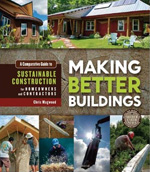
Making Better Buildings:
A Comparative Guide to Sustainable Construction for Homeowners and
Contractors
By:
Chris Magwood, 2014



"This is written by one of the world's most experienced green builders
and educators. It provides you with all the information necessary to
compose the shade of green which suits you best. The information
gathered here about issues such as techniques, embodied energy, health
aspects are unique in the world, and is guaranteed to make this book
the leading reference book for environmentally concerned building
planners for years to come", Max Vittrup Jensen, consultant and
director, PermaLot
Centre of Natural Building |
| |
|
|
|
|
|
|
| |
|
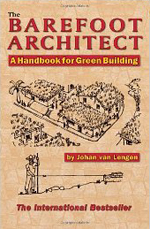
The Barefoot
Architect: A Handbook for Green Building
By: Johan van Lengen, 2007
This book is for people who dream of building a simple home. It is
also for those in the building trades: carpenters, masons, plumbers,
and artisans, as well as for urban planners, rural technicians, and
small community designers. It covers basic design, use of a great
variety of natural materials, construction details, natural heating
and cooling, and water and sanitation techniques. Although many of the
methods shown are traditional, more modern techniques are shown as
well. Recommended by natural builder
Elke Cole |
| |
|
|
|
|
|
|
| |
|
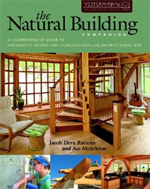
The Natural
Building Companion: A Comprehensive Guide to Integrative Design and
Construction
By: Jacob Deva Racusin and Ace McArleton of
New Frameworks Natural Building,
June 2012
 |
|
|
|
|
| |
|
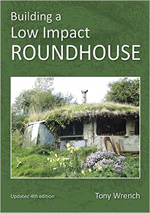
Building a Low Impact Roundhouse
By: Tony Wrench of That
Round House, June 2014
Tony and Jane built their house out of logs and earth with a turf
roof on a community in Wales, this is the story of building the
house. It shows this house looks nothing like the suburban box and
nothing like conventional "owner-built" houses. Low-impact,
low-cost, liveable, and using simple techniques. |
|
|
|
|
| |
|
Creating a Life Together,
Practical Tools to Grow Ecovillages and Intentional Communities
By: Diana Leafe Christian,
January 2003
Creating a Life Together is the only
resource available that provides step-by-step practical information
distilled from numerous firsthand sources on how to establish an
intentional community. It deals in depth with structural,
interpersonal and leadership issues, decision-making methods, vision
statements, and the development of a legal structure, as well as
profiling well-established model communities. This exhaustive guide
includes excellent sample documents among its wealth of resources.
|
| |
|
|
| |
|
The
Carbon-free Home: 36 Remodeling Projects to Help Kick the Fossil-fuel
Habit
By: Stephen Hren and Rebekah Hren, September 2008
Stephen and Rebekah live in Durham, North Carolina, USA. Rebekah
is a licensed electrician, designing and installing photovoltaic
and solar hot water systems. Stephen teaches natural-building classes
and workshops at the local community college. Their book shows first
how to reduce energy consumption, then to retrofit existing homes
to obtain all heating, cooling, cooking, refrigeration, hot water,
and electricity from renewable sources.
|
| |
|
|
| |
|
Natural
Building: A Guide to Materials and Techniques
By: Tom
Woolley on CAT,
August 2006
Describes the many materials and methods that have been used by
the pioneers of natural building; discusses the reasons why various
materials have been chosen and frankly explains their advantages
and disadvantages; provides a detailed consideration of all the
main forms of natural construction, including building with earth,
timber and straw bales; and covers green and natural roofs, lime
and masonry, and the use of hemp, as well as natural insulation
materials, paints and finishes. |
|
|
|
|
| |
|
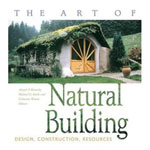
The Art of Natural Building: Design, Construction, Resources
By: Joseph H. Kennedy et al, November 2001
A
complete and user-friendly introduction to natural building for
non-professionals, architects and designers. From straw bale and cob
to recycled concrete and salvaged materials, this anthology of
articles from leaders in the field focuses on both the practical and
the aesthetic concerns of ecological building designs and
techniques. Above all, this empowering guide demonstrates that
anyone can design and build a home from natural materials. |
|
|
|
|
| |
|
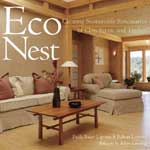
Econest:
Creating Sustainable Sanctuaries of Clay, Straw, and Timber
By: Paula Baker-Laporte,
Robert Laporte
of Eco Nest,
September 2005
Like the bird, humans desire shelter that is
cosy and nurturing,
that satisfies the soul, mind, and body. This is the econest. |
|
|
|
|
| |
|
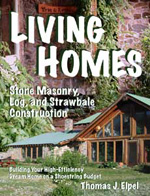
Living
Homes :
Stone Masonry, Log, and Strawbale Construction :
Stone Masonry, Log, and Strawbale Construction
By: Thomas J. Elpel of
Hollow Top,
2010
Living
Homes takes you through the planning process to design an energy
and resource efficient home that won't break the bank. Author Thomas
J. Elpel guides you through the nuts and bolts of construction for
tilt-up stone walls, log home construction,
building with straw bales, making your own "terra tile"
floors, windows & doors, solar water systems, masonry heaters,
framing, plumbing, grey water, septic systems, swamp filters, painting
and more! |
|
|
|
|
| |
|
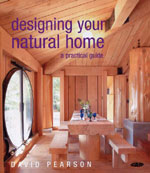
Designing
Your Natural Home: A Practical Guide
By: David Pearson, September 2005
Contains
ten examples of people who have built their own homes of various
sizes, materials, budgets and styles including timber, cob, rammed
earth, tyres, stone, straw bale and reclaimed and salvaged materials.
The book is full of inspiring photographs. |
|
|
|
|
| |
|
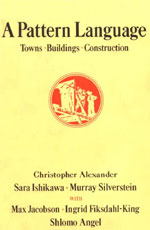
A
Pattern Language: Towns, Buildings, Construction
By Christopher Alexander, August 1978
Used
by Ted Owens of Building
With Awareness to design his home. See his book here 
This
book enables any person to design a house by using "patterns"
to solve design problems. These patterns simply state the concept,
such as where to place windows, and then explain the resolution
in a few paragraphs. |
|
|
|
|
| |
|
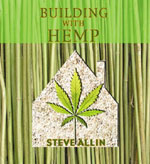
Building
with Hemp
By: Steve Allin of Hemp
Building, October 2005
This
book showcases the recent development of using hemp products in
an ecologically sustainable system. The information which can be
used by architects, builders, developers, interior designers and
'do it yourself' enthusiasts, is presented in plain language and
includes over 300 colour photographs, illustrations and diagrams.
Based on over eight years research and experiment by the author
and the experience of those at the forefront of hemp building development
in France. |
|
|
|
|
| |
|
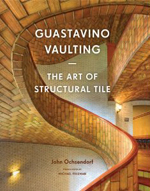
Guastavino Vaulting:
The Art of Structural Tile
By: John Ochsendorf,
September 2010
Since the time of ancient Rome,
architects, engineers, and builders have struggled with the problem
of building domed ceilings over large spaces. No one was more
skilled at this than the Rafael Guastavino family, a father and son
team from Span who oversaw the construction of thousands of
spectacular thin-tile vaults across the United States between the
1880s and the 1950s.
|
|
|
|
|
| |
|
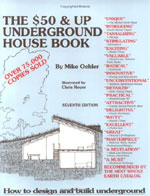
50
Dollars and Up Underground House Book
By: Mike Oehler of Underground
Housing, April 1982
Explains
the whole process of designing and building an underground home,
first from basic design right through to a built-in greenhouse.
Mike explains why they can be warm in the winter and cool in the
summer and how the architectural possibilities are enormous. |
|
|