| |
|
|
| |
 |
|
| |
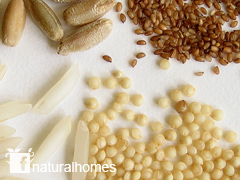
Amaranth grain
comparison, bottom right
going clockwise:
amaranth, rice, rye, teff
|
|
|
|
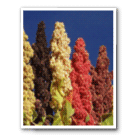 |
In Mexico the seeds are roasted for the traditional drink 'atole' while in Peru the grain is used to make beer. Elsewhere the flower is used to
colour maize and
quinoa. |
The
protein in amaranth grain is about the same as other grains,
14%, but amaranth far exceeds the calcium of other grains by about
4 times at 159mg/100g. That's more than milk which contains
around 120mg/100g. Amaranth leaves are high in calcium too
compared to other vegetables at
215mg/100g while spinach, also high, has only 99mg/100g. Amaranth seed contains two essential amino acids, lysine and methionine, that are not often found in grain.
It is high in fibre, three times that of wheat. Apart from calcium
its mineral content is similar to other grains.
 |
The young tender leaves are
the best for eating, leave the older larger leaves to collect
energy for the plant. If you want to collect the seeds, take a large
bag, put it over the top of the plant, gently tip the plant to the
side, and shake (demonstrated in the
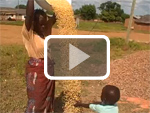
Fat Hen video). Once you've collected the seed then winnow
it (see video below) to remove any bugs, seed heads and flower debris. |
|
On winnowing, here's a beautiful verse from the poem
Ode To Autumn by John Keats
Who hath not seen thee oft amid thy store?
Sometimes whoever seeks abroad may find
Thee sitting careless on a granary floor,
Thy hair soft-lifted by the winnowing wind;
|
|
|
|
|