Burdock has anti-bacterial and anti-fungal proprieties.

There are many ways to include burdock in your food for free diet …


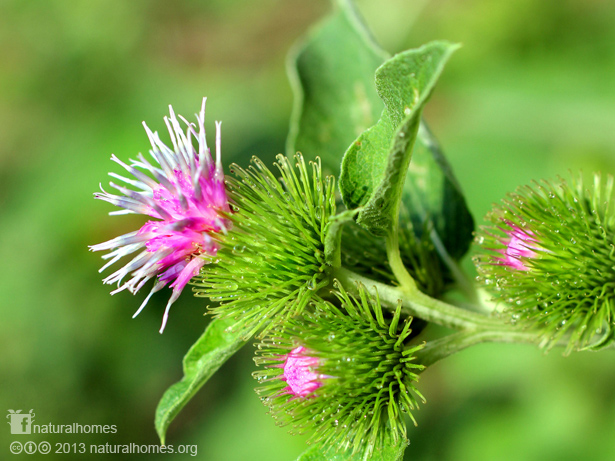
Burdock's name has two parts, 'bur' referring to the seed head has burs that stick to your clothing and 'dock' which is a word for 'remove' suggesting it's a weed.


The leaves are large with a powdery white under-leaf similar to Fat Hen (Lamb's Quarters).


Burdock root


The very deep growing roots of the burdock are edible smelling a little like potato. The roots of the young plant are sliced diagonally in thin strips and boiled. As the roots age they become more bitter and woody. The young leaves can be eaten but are bitter a ploy the plant uses to protect its self from predators. A Peeled burdock stems are also edible, and not as bitter as the leaves.


Steve Brill talking
about burdock


Burdock has anti-bacterial and anti-fungal proprieties. Burdock is also a diuretic and the roots can be laxative. The burdock should not be confused with Dock Leaf (also called Bitter Dock) which does not have the same under-leaf whiteness and taste horrible!


Magnoliophyta: Magnoliopsida: Asteridae: Asterales: Asteraceae: Arctium