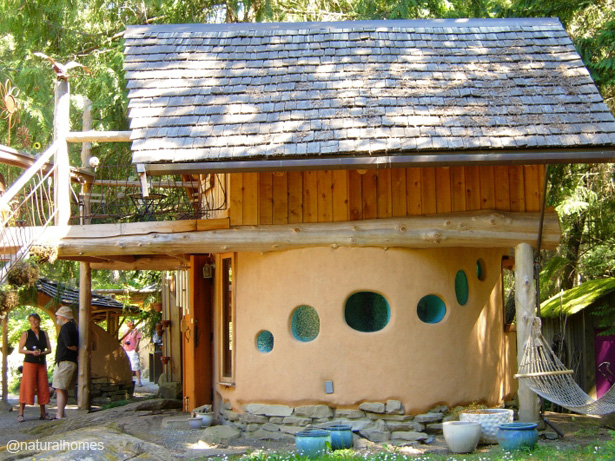
Healthy LivingUnlike conventional homes which are largely built with synthetic,
industrial materials, cob homes are built almost entirely out of
natural and clean materials. Industrial homes are often filled
with indoor air pollutants and off-gassing of chemicals contained
in the materials. Cob homes do not have this problem. In fact, cob
actually “breathes” through tiny pores and keeps air fresh and
healthy. If you suffer from indoor allergies then living in a cob
house could significantly improve your quality of life by
eliminating the toxins that may cause them.
Will my home wash away in the rain?
One of the most commonly asked questions about cob is “What
happens when it rains?” Cob building originated in England and
Wales, which are not dry places in any way. There are areas with
whole villages constructed with cob, many of them several
centuries old.
The solution to this is the same as that of any building style: A
good roof and a good foundation is the key to surviving a wet
climate. A stem wall with sufficient height to protect the cob walls
from splashing water when it rains and large roof overhangs are
time proven methods to ensure the survival of the building.
Added protection in the form of a lime plaster is often found
on cob buildings. Do make sure that any render you use to protect
your walls does not limit the permeability or breath-ability of
your walls [ discussion] as this may lead to moisture build up and lead to
catastrophic failure of the walls.
discussion] as this may lead to moisture build up and lead to
catastrophic failure of the walls. |